About BML
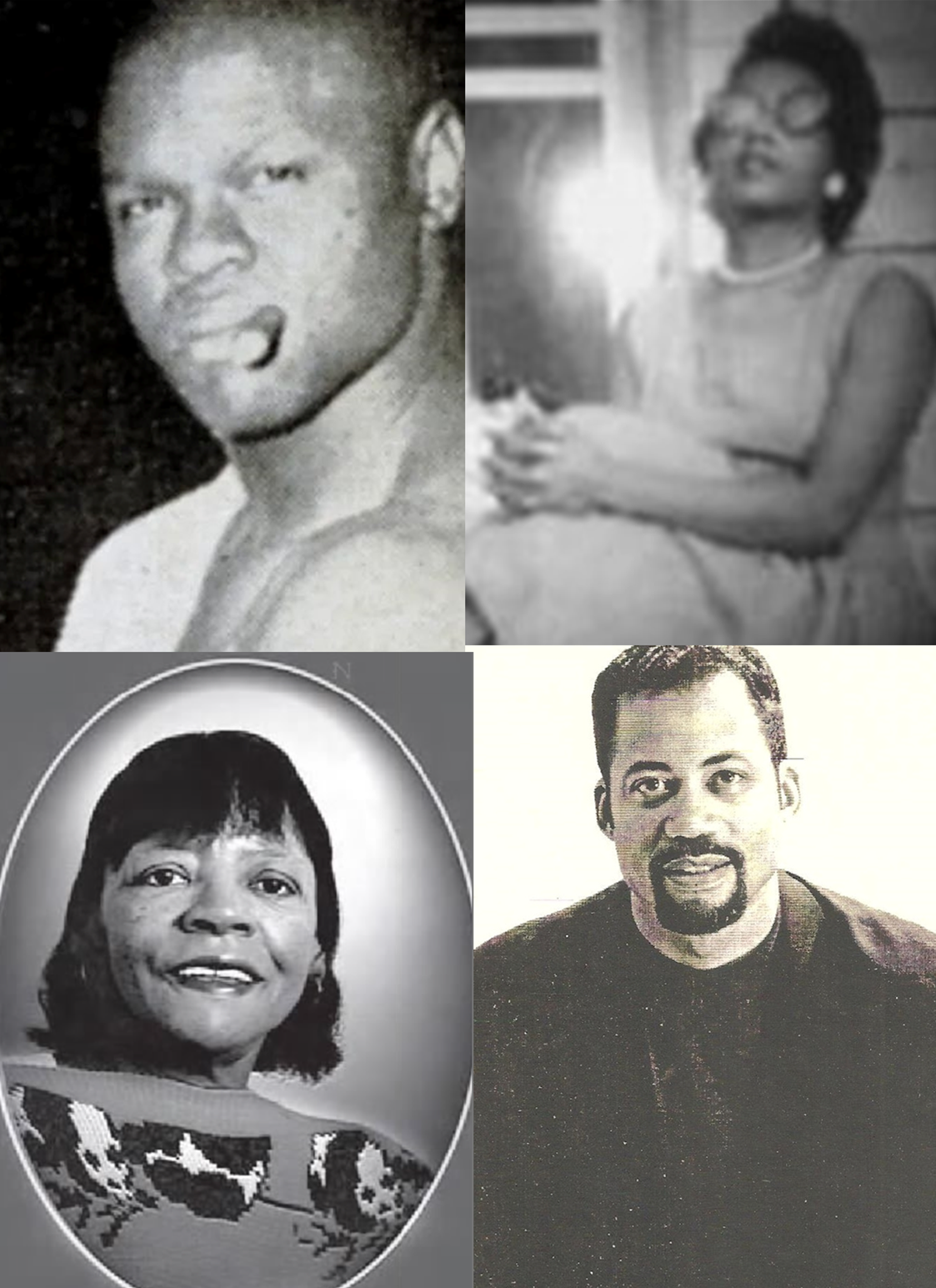
Faded Pictures.
In January, 2023, Black Movement Leaders co-founder, Dana Smith asked:
“Why don’t I ever hear about Black leaders in the history of this movement? Whenever I hear people talking about the shoulders we stand on, they’re talking about a white person. Can we figure out some way to find the people we are missing without it being just for Black history month? I want to do something year round.”
And that’s why the Black Movement Leaders project began. It was born between its three co-founders: Dana, Chackupurackal “Chacku” Mathai and Sera Davidow and premiered February of that year. For Chacku, some of this work also represented carrying on the vision of ideas he’d talked for years about with Celia Brown. Celia died only months before this project began.
As the project moved forward, it became increasingly clear how many Black leaders there have been in the psychiatric survivor and related movements*, as well as how many of those stories have already been lost in part or full. So many people who should be remembered well are hard to find at all without scouring the Internet or contacting the people who still remember them.
That includes Ben Riley (top left) who fought discriminatory treatment against Black psychiatric patients at Rusk State Hospital in Texas while he himself was incarcerated there, Jennie Fulgham (top right) who opened her home in Virginia to other psychiatric survivors, Ruby Rogers (bottom left) who fought against psychiatric force in Massachusetts and won and Julius Green (bottom right) who was instrumental in developing peer supports in New York City for people struggling with both substance use and emotional distress. These are some of the only (if not the only) images left and the stories are often only slightly less sparse and blurry. This is why the project continues.
*”Overlapping movements” refers to movements of people who have experienced houselessness, incarceration, problems with substances, trauma and other life-interrupting challenges in addition or adjacent to having psychiatric histories.
Original Project Statement & Call to Action
There is a movement made up of people with psychiatric histories who have been significantly impacted by trauma (both within and beyond the psychiatric system) and other life hardships. This movement goes by many names: Psychiatric survivor, consumer/survivor/ex-patient, and more, and is perhaps best described as several overlapping movements. It is a movement that fights for humanity, dignity, justice, alternative supports, and centering the wisdom of those who’ve ‘been there’ at the same time that societal norms continue to include silencing, devaluing, and unnecessary medicalization of distress in the name of psychiatric oppression.
However, the faces and voices of this movement has consistently skewed white, while the faces and voices of people most deeply and negatively impacted by the psychiatric and other intersecting systems are black and brown. The fact of the matter is that there have been and continue to be many powerful Black leaders within this movement who are too often made less visible by a society that continues to find it easier and more automatic to lift up white voices first.
This ongoing trend causes great harm. Not only in its most obvious inequities, but also by perpetuating a gap for people who are currently struggling and unable to find anyone who looks like them. We need people to identify with, including those who has moved through struggles and beyond to a full life that they are living on their own terms. This gap contributes to more black and brown people becoming stuck in these systems, and fewer emerging as leaders themselves for lack of support and visibility of that potential.
This exhibit is intended as only one of many small steps to counter that trend. We consider it not just an exhibit, but a call to action to lift up more black voices, to at least sometimes take a step back to make space for those who’ve had less access to these platforms, to share or pass along invitations to step forward, and to make intentional efforts to mentor and grow emerging Black voices, too.
All this said, we need to acknowledge that this process is deeply imperfect. Even the existence of this exhibit is itself a product of white supremacy. In some ways, it is complicit by acting as if “Black leader” is something different and set apart from “leader” overall. The accomplishments of Black people in this movement would simply and routinely be acknowledged alongside everyone else without needing to differentiate were we where we should be. And yet, these voices are not recognized enough, and we hope this exhibit can serve as a step along the way, not just to equity but to inclusion for all.
Thank you for taking the time to share in this exhibit with us. We hope you will learn these names and stories and integrate their words and accomplishments into your work as you move through your days.
Dana Smith
Chacku Mathai
Sera Davidow
Thank Yous & Appreciations
Thanks to…
Thanks goes out to Laverne Miller, Wilma Townsend, Iden Camobell, Chyrell Bellamy, Keris Jän Myrick, Khatera Aslami, Oryx Cohen, Pat Deegan, and Leah Harris for their efforts to help us identify people who should be included during our initial start-up.
Thanks as well to people who have previously been involved in getting this project off the ground including Mr. J, Jerome Jenkins, Natan Cohen and Amy Troyer-Karas.
And a special thanks to Vanessa Jackson who has done more than anyone else we’re aware of to preserve the stories of Black psychiatric survivors and without whom we wouldn’t know some of the names we’ve mentioned even on this page!